
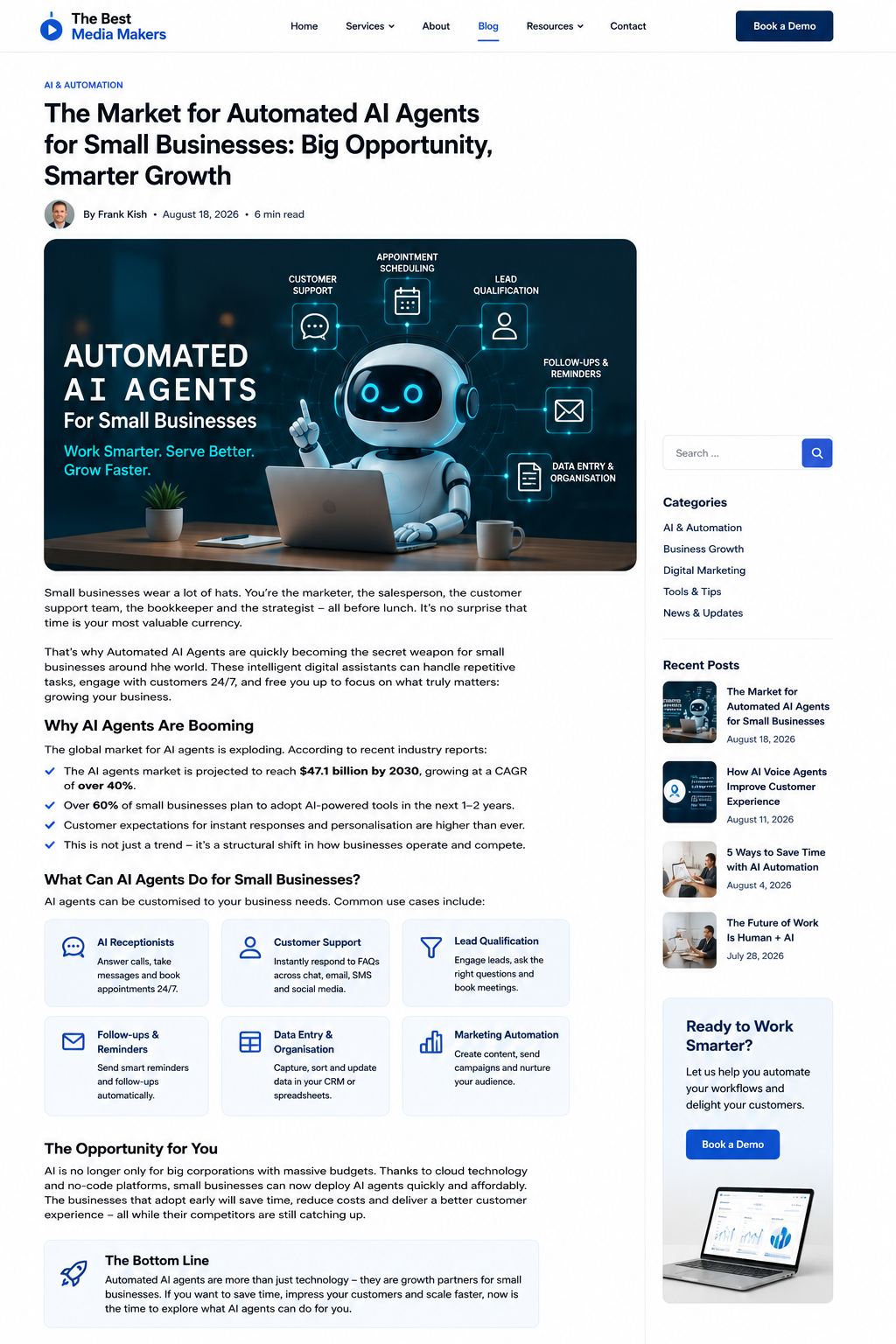
The Market for Automated AI Agents for Small Businesses: Big Opportunity, Smarter Growth
Artificial Intelligence is no longer technology reserved for large corporations with huge IT budgets. One of the most important changes happening in the AI market is the rapid growth of automated AI agents designed for small and medium-sized businesses.
For a small business, time is often its most limited resource. Owners and employees may be answering calls, responding to enquiries, booking appointments, following up leads, preparing marketing content and managing administration—all while trying to actually run the business.
Automated AI agents can change that.
What Is an Automated AI Agent?
An AI agent is more than a traditional chatbot. It can be designed to understand a request, make decisions within defined rules, interact with other systems and complete actions automatically.
For example, an AI receptionist could answer a customer’s phone call, understand why they are calling, provide information, collect their details, qualify the enquiry and book an appointment directly into a calendar.
Other agents can work behind the scenes, connecting websites, email, calendars, CRM systems, spreadsheets and social media platforms.
Instead of simply answering questions, the agent can do the work.
Why Small Businesses Are an Important Market
Small businesses often face an automation problem.
They need many of the capabilities available to large organisations, but they usually don’t have dedicated call centres, marketing departments, customer-service teams or large IT departments.
AI agents can help close that gap.
A small business can potentially have an AI receptionist available outside normal business hours, automatically respond to common enquiries and capture leads that might otherwise be lost.
This creates an attractive business case: automate repetitive work without necessarily adding another full-time employee.
Where AI Agents Can Deliver Value
There are many practical applications already suitable for smaller businesses.
AI Receptionists
Voice AI agents can answer incoming calls, explain services, capture customer information, route calls and book appointments.
For businesses where missed calls can mean missed revenue, this can be particularly valuable.
Appointment Booking
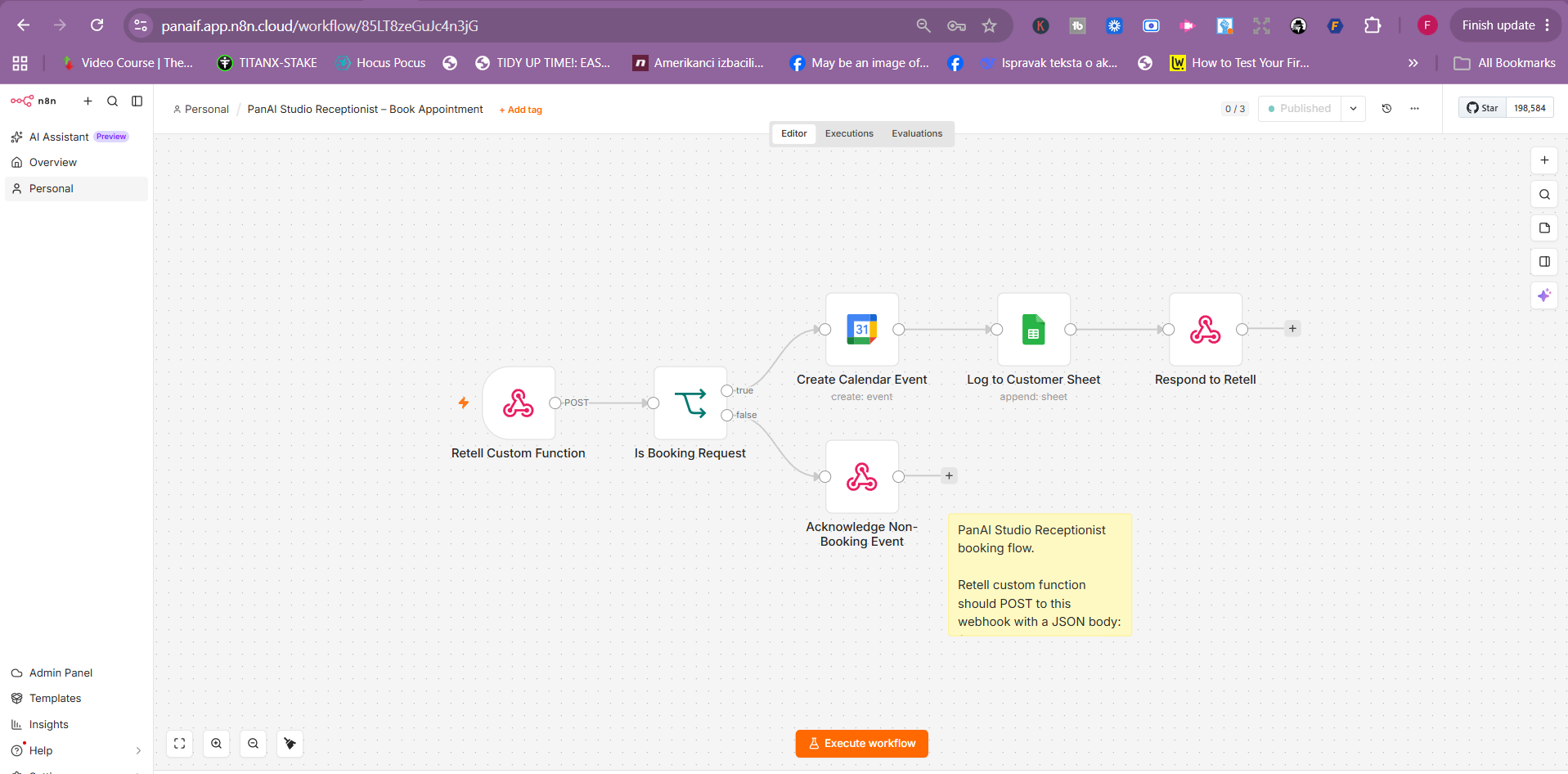
An AI agent can connect with a calendar, check availability and schedule appointments while speaking with the customer.
This is useful for consultants, trades, clinics, beauty businesses, professional services and many other appointment-based organisations.
Lead Qualification
Not every enquiry is a genuine sales opportunity.
An AI agent can ask predefined questions, collect the required information and identify higher-quality leads before handing them to a salesperson.
Customer Support
Businesses receive the same questions repeatedly: opening hours, pricing, availability, delivery information, services and appointment changes.
An AI agent connected to an approved business knowledge base can handle many of these routine enquiries while escalating more complicated matters to a person.
Follow-Ups and Reminders
AI-powered automation can help businesses follow up enquiries, send appointment reminders and reconnect with potential customers.
This addresses a common small-business problem: good leads disappearing simply because nobody had time to follow them up.
Marketing and Social Media
AI agents can also assist with drafting social media posts, generating content ideas and preparing marketing material.
Combined with workflow automation, content can move through a process such as:
Idea → AI-generated draft → human approval → publication
Human oversight remains important, particularly for anything representing the business publicly.
Connected AI Agents: The Next Stage
The bigger opportunity is not necessarily one AI agent doing everything.
It is multiple specialised AI agents working together.
Imagine a potential customer contacts a business.
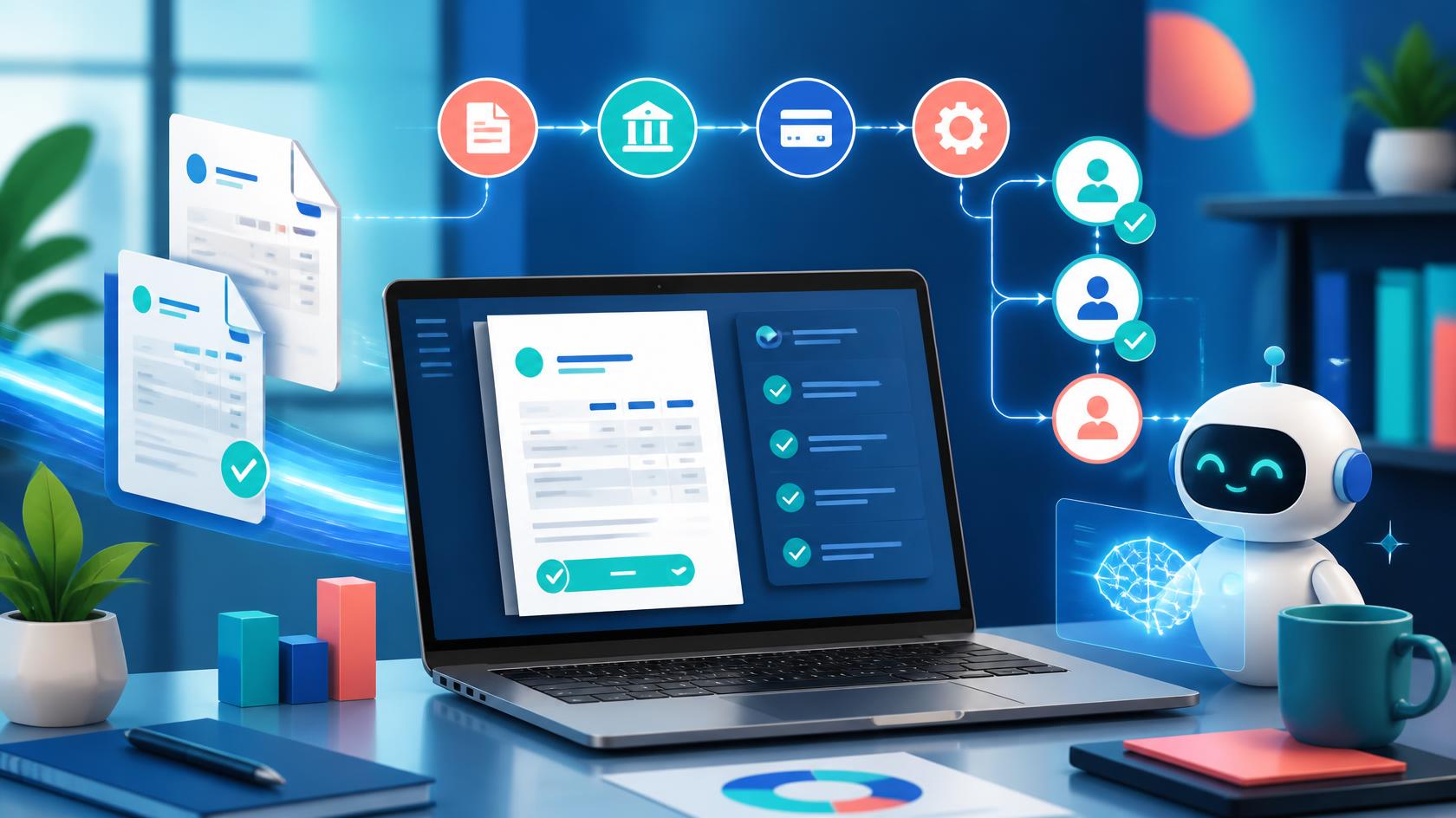
A receptionist agent handles the initial conversation. A lead qualification agent determines what the customer needs. A scheduling agent checks availability and books a meeting. Another workflow records the information in the CRM. A follow-up agent later sends a reminder.
Each agent has a defined responsibility, but together they create an automated business workflow.
This is where AI agents become much more than chatbots.
AI Doesn’t Have to Replace People
For many small businesses, the most practical AI strategy isn’t replacing employees.
It’s removing repetitive work from employees.
People are generally more valuable when they’re solving unusual problems, building customer relationships, making important decisions and performing work requiring expertise and judgement.
AI can handle more predictable tasks while people concentrate on the areas where human involvement adds the greatest value.
A successful model is therefore often:
AI handles the repetitive work. People handle the important exceptions and relationships.
The Barrier to Entry Is Falling
Another reason this market is growing is accessibility.
Cloud AI services, voice platforms, workflow automation tools, APIs and low-code/no-code technology have dramatically reduced the infrastructure required to build useful business automation.
A small organisation doesn’t necessarily need to develop its own AI model.
Instead, existing technologies can be integrated around the company’s actual business processes.
This changes the question from:
“Can a small business afford AI?”
to:
“Which parts of the business should we automate first?”
Start Small and Solve a Real Problem
Businesses shouldn’t adopt AI simply because AI is popular.
Start with a measurable problem.
Are too many calls being missed?
Are employees spending hours answering repetitive questions?
Are leads not being followed up?
Does appointment scheduling consume too much administrative time?
Once the problem is identified, an AI agent can be designed around that specific workflow.
Start with one useful automation, measure the results and expand from there.
The Opportunity Ahead
Automated AI agents represent a significant opportunity for small businesses because they bring capabilities that were previously difficult or expensive to implement.
The businesses that benefit most may not be those deploying the largest number of AI tools. They will be the businesses that identify the right processes to automate and connect AI effectively with their existing people and systems.
AI agents are moving from experimental technology toward practical digital workers capable of answering, organising, scheduling, qualifying, creating and coordinating.
For small businesses, that could mean fewer missed opportunities, faster customer service and more time to focus on growth.
Ready to Explore AI Agents for Your Business?
PanAI Studio helps businesses explore practical AI automation, including AI voice receptionists, appointment-booking agents, customer-support agents, lead qualification and connected business workflows.
The objective is simple: use AI where it genuinely saves time, improves customer service and makes the business work better.
Work smarter. Respond faster. Grow with AI.
Leave a Reply